Products and configurations to compare
Camco 25-ft heated drinking-water hose
Current model states freeze protection to -20°F and drinking-water certification.
Best when: you need continuous city water below freezing
Watch for: high price, cord management and storage bulk
Premium standard RV drinking-water hose
Simpler, lighter and cheaper.
Best when: temperatures stay above freezing
Watch for: requires draining/disconnecting in freeze risk
Heated hose insulation/connection cover
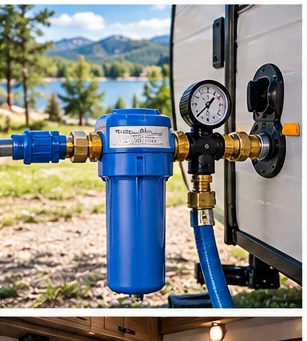
The hose is only one freeze point; regulator and pedestal fittings need planning too.
Best when: spigot/regulator/fittings remain exposed even with a heated hose
Watch for: must not create unsafe electrical/water conditions
The heated hose does not protect every fitting
Pedestal, regulator and RV inlet can still freeze.
Power becomes part of the water system
Use outdoor-rated, protected connections according to instructions.
Tank-fill mode is an underrated alternative
Fill the onboard tank, disconnect/drain the outside hose and use the pump during very cold nights.
Length matters more in winter
Excess heated hose coiled under the RV adds bulk and electrical load without benefit.
Drain before storage
Water left in fittings can freeze or grow stagnant between trips.
RV water pumps are matched to plumbing, not just gallons per minute
Most replacement mistakes come from buying by flow number alone. Voltage, shutoff pressure, port type, footprint, fuse/circuit capacity and accumulator/bypass behavior all matter. A 3.0 GPM pump at 50–55 PSI can be an excellent replacement only when the RV plumbing and existing installation expect that pressure range.
Photograph the old pump label, wiring, strainer and hose routing before removal. Measure the space and confirm which fittings are threaded versus quick-connect. A quieter pump can still transmit vibration if mounted rigidly against a cabinet wall.
Fresh-water cleanliness is separate from pump performance
A strong pump does not make questionable water potable. Keep hoses, filters, tank sanitation and winterization as separate maintenance systems. Use components specifically intended for drinking-water service where applicable.
Before checkout
- Exact RV voltage, amp service and existing component model are known
- Physical dimensions and service access are measured
- Wire, hose, port and fitting sizes are confirmed before ordering
- Product duty cycle/output matches the real worst-case load
- Cold-weather requirements are considered
- Consumables and replacement parts remain available
- Installation does not defeat factory protection or ventilation
- Mobile-app features are not required for basic emergency operation
- Return policy allows a real fit/compatibility check
- Professional installation cost is included where appropriate
Fitment and installed cost matter more than the sale price
RV equipment rarely exists in isolation. A cheaper pump that needs new fittings, a lithium battery that forces a converter change, a soft start that needs professional rooftop labor or an inverter that requires new cable/fusing can cost more installed than the premium part that actually matches the rig. Write down the entire install list before comparing prices.
Also measure service access. Components eventually need filters cleaned, bolts checked, firmware/app access, batteries changed or hoses disconnected. An installation that technically fits but cannot be serviced without dismantling a cabinet is not a good installation.
First-trip test
Test new systems close to home before depending on them several states away. Inflate every RV tire, run the pump through several faucets, cycle the AC repeatedly on the intended generator, dump through the sanitation setup, or run the inverter under realistic loads. Watch for heat, voltage drop, leaks, vibration, nuisance alarms and connection loosening. Fix those problems before the long trip.
Keep the old functional component when practical until the replacement survives that shakedown. A known-working pump, charger or level can be valuable backup while a new installation is still proving itself.
Frequently asked questions
How cold can a heated hose work?
It depends on the model; the current Camco reference claims down to -20°F.
Can I drink through it?
Use a hose specifically certified/intended for drinking water.
Do I still need to protect the regulator?
Yes. Exposed non-heated fittings can freeze.
Should I leave city water connected in every freeze?
Not necessarily; onboard-tank mode can be simpler and reduce exterior freeze points.
Current manufacturer/source checks
Affiliate disclosure: RVGear.co is reader-supported. Amazon links use Associates tag scouttheory-20 and eBay links use Partner Network campaign 5339137014. We may earn a commission at no extra cost to you.